By Daniel W. Payette, DCA Board member.
Hello everyone. Summer is just around the corner after a beautiful but long winter. This is a good time to tell you how our lakes fared in 2025 and to remind ourselves of the steps we need to take to ensure they remain the jewels they are.
On April 26, I represented you at the annual general meeting of the Alliance of Lake Associations of Gore, which brings together associations representing 23 lakes in the region. When I introduced myself to one of the members of its board of directors, she replied: “I looked at the water quality of the lakes represented here, and yours are pristine.” This is an independent endorsement that validates our steady efforts over the years.
The data collected in 2025 by our dedicated volunteers confirms her observation. First and foremost, I would like to thank Gustavo and Esther Labbé, François Côté, André Therrien, and Bonnie Swaine for the time they devote to taking samples in fair and foul weather.
Overall, the 2025 results are excellent and reflect strong continuity. Jacques Pigeon has already published them on our website, and I invite you to refer to it for more details. Here, I will give you the highlights, lake by lake.
First, Black Lake.
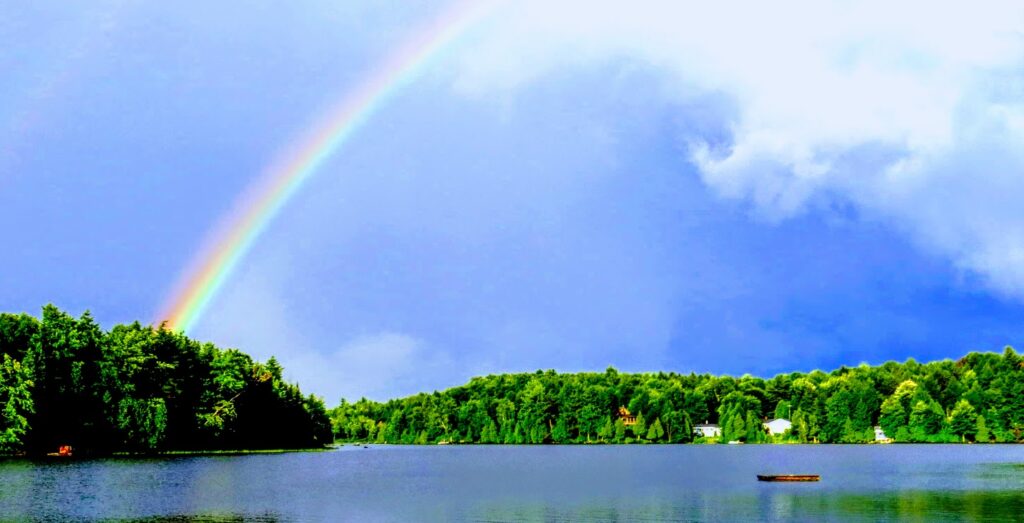
All of the measurements place it in better condition than its long-term average. In short, this means the results are better than the average established from the data recorded since 2006. It therefore shows little or no sign of eutrophication, making it a lake we must continue to protect by limiting nutrient inputs such as fertilizers and by preserving shoreline protection bands.
Next, Boyd Lake.
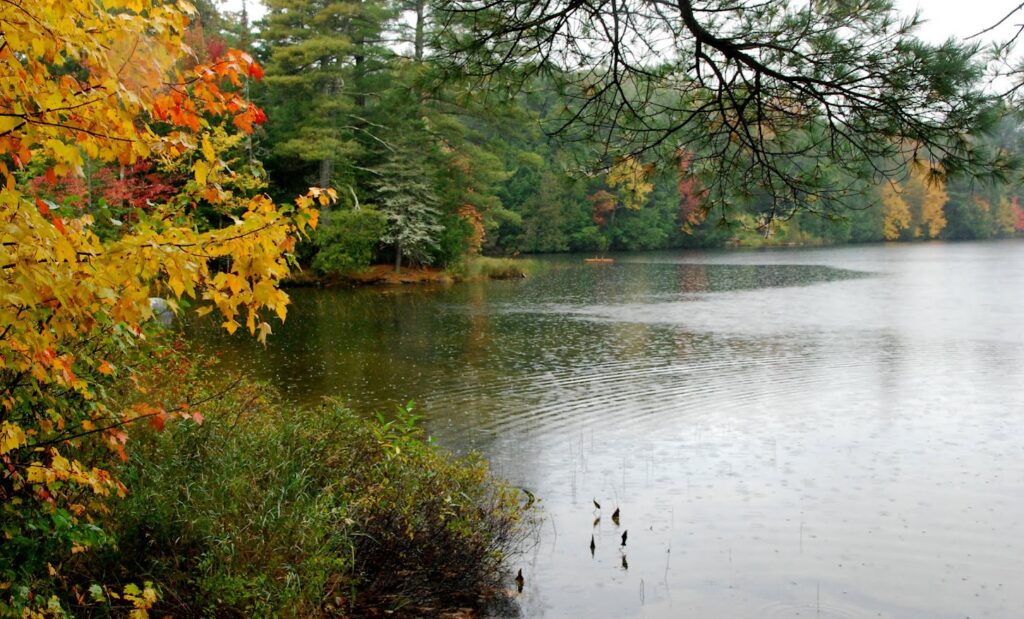
Generally speaking, the news is good. That said, two of the three samples showed a relatively high phosphorus level, which brings the annual average to a level that should be monitored. We saw a similar average in 2023 because of one truly out-of-range sample. However, in light of the good results from the other 2023 samples and the 2024 results, we concluded that the high reading was an anomaly. Since the level is somewhat high because of two tests, we will need to pay closer attention to the 2026 results. Because this level indicates a slightly elevated nutrient input, Boyd residents should pay closer attention to the quality of their shoreline protection bands, the proper functioning of their septic systems, and the pumping out of their septic tanks, among other things. That said, the other indicators for Boyd remain good. We simply need to keep monitoring it.
Clear Lake.
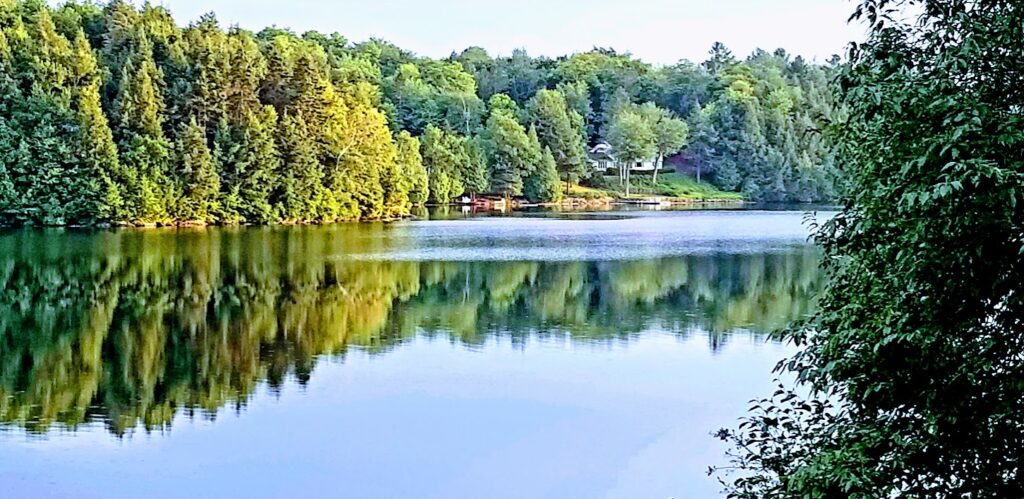
It continues on its strong trajectory. All indicators are excellent, better than the long-term average. On July 29, François even measured a transparency of 10.4 metres. That’s more than 34 feet! The annual average is 6.8 metres, or more than 22 feet. In short, Clear Lake is a gem that must be preserved by maintaining the good practices adopted over the years.
Lastly, Curran Lake.
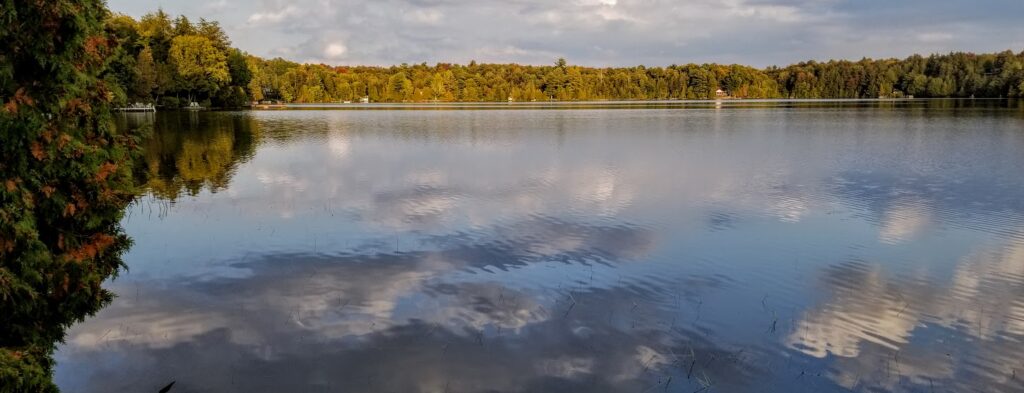
As with Boyd Lake, phosphorus levels this year were somewhat elevated, this time because of an unusually high result in June. There is no cause for alarm, but we do need to remain vigilant going forward. The same recommendations as for Boyd Lake apply. That said, phosphorus levels in the other two samples were good, if not excellent, which puts the first result into perspective. Contamination from something as small as a fly’s leg can affect a result. Moreover, the other measurements have remained within the healthy average since 2006.
Conclusion.
Our lakes are doing well, but we must continue to monitor them. Our homes on the shores of healthy lakes are worth more to us and to our loved ones than if they were located on the shores of lakes whose problems we read about in the newspapers every summer. Maintaining their non-navigable status remains the first line of defence against eutrophication or degradation. In this regard, please do not hesitate to let me know if you notice that a property is for sale on your lake. I will contact the listing agent so that this status is clearly highlighted in the real estate listing.
Regular septic tank pumping remains the most important active measure to take. A septic tank must be pumped out at least every 2 years for a primary residence and at least every 4 years for a secondary residence. This is not something to bend the rules on by convincing ourselves that spending 70% of our time at our Dunany home allows us to wait 4 years between pump-outs. The health of our lakes is at stake, which also means the value of your property.
Preserving or restoring shoreline protection bands is also an essential measure. Those around our lakes are in good condition, but they can be improved. A shoreline protection band, as illustrated below, is made up of permanent vegetation along the lake’s edge. It acts as a natural filter and protects the aquatic ecosystem by slowing erosion and blocking pollutants.
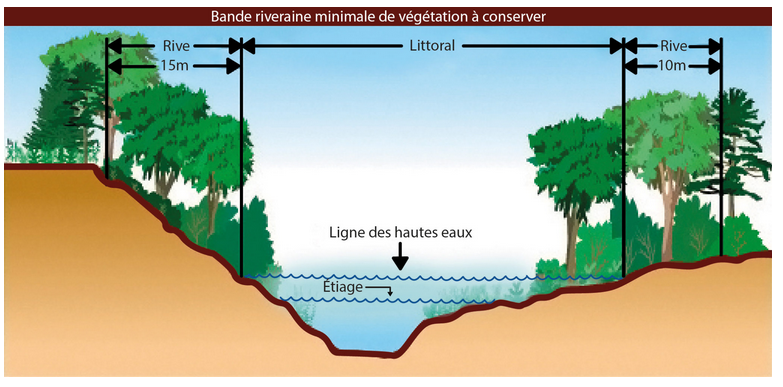
It must be 10 metres or 33 feet wide if the slope of the land is gentle (less than 33%) and 15 metres or 50 feet if the slope is steeper. We should also remember that it is sometimes possible to create an opening in the buffer strip, but not just any way. If the slope is less than 33%, the ground opening can be up to 5 metres (about 15 feet) wide to provide access to the water. The opening must be vegetated, and if there is a path, it should run diagonally to help prevent erosion. By contrast, if the slope is steeper, you cannot create a ground opening, but rather a narrow path or staircase, again running diagonally toward the water. It is possible to create a 5-metre-wide visual opening by pruning branches. Here again, this is not something to cut corners on. Every small action counts. The health of our lakes depends on it.
With that, I wish you a wonderful summer, and please do not hesitate to contact me with any comments, questions, or suggestions.
I sent a comment, hope it reached the incoming comments.
All to say how proud we are to have people the helm who are willing to transmit this wonderful reporting on our lakes.
Great work on your reporting and research done to produce it. Very proud of our lakes and of the quality of their waters.
Thank you for your hard work and great results
Excellent report Daniel….we appreciate all your insights and what all can do better, to preserve our lakes…thank you
Great news Daniel thanks
Thank you Daniel for your excellent report. The quality of our lakes is the cumulative result of the efforts by all of our neighbours, which we know must continue. Bravo to all!
Neil & Barbara
Great report Daniel! Thank you. 🙏